Most men have only ever had three options for dealing with unwanted body hair: shave it, wax it, or trim it down. All three come with the same problem — they don’t last. Shaving brings razor burn and ingrown hairs within a day or two. Waxing hurts, and the regrowth still shows up within weeks. Trimming barely counts as a solution at all. However careful you are, the hair comes back, and you’re back to square one.
Laser hair removal works differently. Instead of cutting or pulling hair at the surface, it targets the follicle itself with concentrated light energy, so regrowth slows down — and for a lot of men, eventually stops being a real concern at all. It takes a few sessions to get there, not one visit, but the difference shows. A lot of guys also notice it just feels better day to day, especially in areas like the neck, chest, and back that tend to get irritated fast with regular shaving.
If you’re weighing whether it’s worth trying, it helps to actually understand how the treatment works, which areas respond best, and what a realistic timeline looks like — not just the sales pitch version. Go in with the right expectations and a provider who knows what they’re doing, and it’s a genuinely low-maintenance way to deal with something that’s been annoying men for decades.
For decades, shaving, waxing, and trimming were the only real options men had for managing unwanted body hair. But these methods come with familiar frustrations: razor burn, ingrown hairs, constant upkeep, and results that vanish within a day or two. No matter how careful the technique, hair typically grows back within days, keeping men stuck in an endless grooming cycle.
Why More Men Are Turning to Laser Hair Removal
Grooming trends have shifted considerably over the past decade, with more men prioritizing skincare and body maintenance than ever before. Laser hair removal results fits naturally into this shift because it addresses common pain points that razors and wax simply can’t solve. Shaving irritates the skin, especially on sensitive areas like the neck and chest, often leading to redness, bumps, and ingrown hairs. Waxing is painful and temporary. Laser treatment, by contrast, targets the hair follicle directly, reducing regrowth over time and, for many men, eliminating the need for regular shaving altogether.
Beyond convenience, many men pursue Laser hair reduction for aesthetic reasons, athletic purposes (such as reducing hair for swimming or bodybuilding), or simply to eliminate the daily irritation that comes with frequent shaving in areas like the beard line, neck, or back.
How Laser Hair Removal Works
Laser hair removal uses concentrated light energy to target the pigment (melanin) in hair follicles. The laser heats the follicle, damaging it enough to inhibit future hair growth without harming the surrounding skin. Because the laser targets pigment, it works best on people with a clear contrast between skin tone and hair color, though modern lasers, including Nd:YAG lasers, have improved treatment options for men with darker skin tones.
Hair grows in cycles, and the laser can only effectively target follicles in the active growth phase (anagen). Since not all hairs are in this phase at the same time, multiple sessions are needed to catch hair as it cycles through growth stages. This is why Laser hair reduction is a gradual process rather than a one-time fix.
Common Treatment Areas for Men
Men typically seek laser hair removal for different areas than women, often focusing on regions prone to irritation or areas that require frequent upkeep:
- Back and shoulders: Hard-to-reach areas that are difficult to shave effectively and prone to ingrown hairs.
- Chest: A popular area for men wanting a cleaner, less hairy look without constant trimming.
- Neck and beard line: Helps create clean, sharp lines and reduces razor bumps common in this sensitive area.
- Underarms: Reduces odor-trapping hair and sweat-related irritation.
- Legs and arms: Common among athletes, swimmers, and cyclists seeking reduced drag or a cleaner aesthetic.
Each area has its own considerations regarding pain tolerance, skin sensitivity, and session length, so a consultation with a licensed provider is essential to create a treatment plan suited to your goals.
What to Expect Before Treatment
Before your first session, a consultation with a dermatologist or licensed laser technician is necessary to assess your skin tone, hair color, and medical history. This helps determine the right laser type and settings for your skin.
In the weeks leading up to treatment, you’ll typically be advised to:
- Avoid sun exposure and tanning, since tanned skin increases the risk of burns or pigmentation changes.
- Stop waxing, plucking, or using hair removal creams, since these remove the hair follicle that the laser needs to target.
- Shave the treatment area a day or two before your appointment, as this allows the laser to focus on the follicle beneath the skin rather than burning surface hair.
What Happens During the Procedure
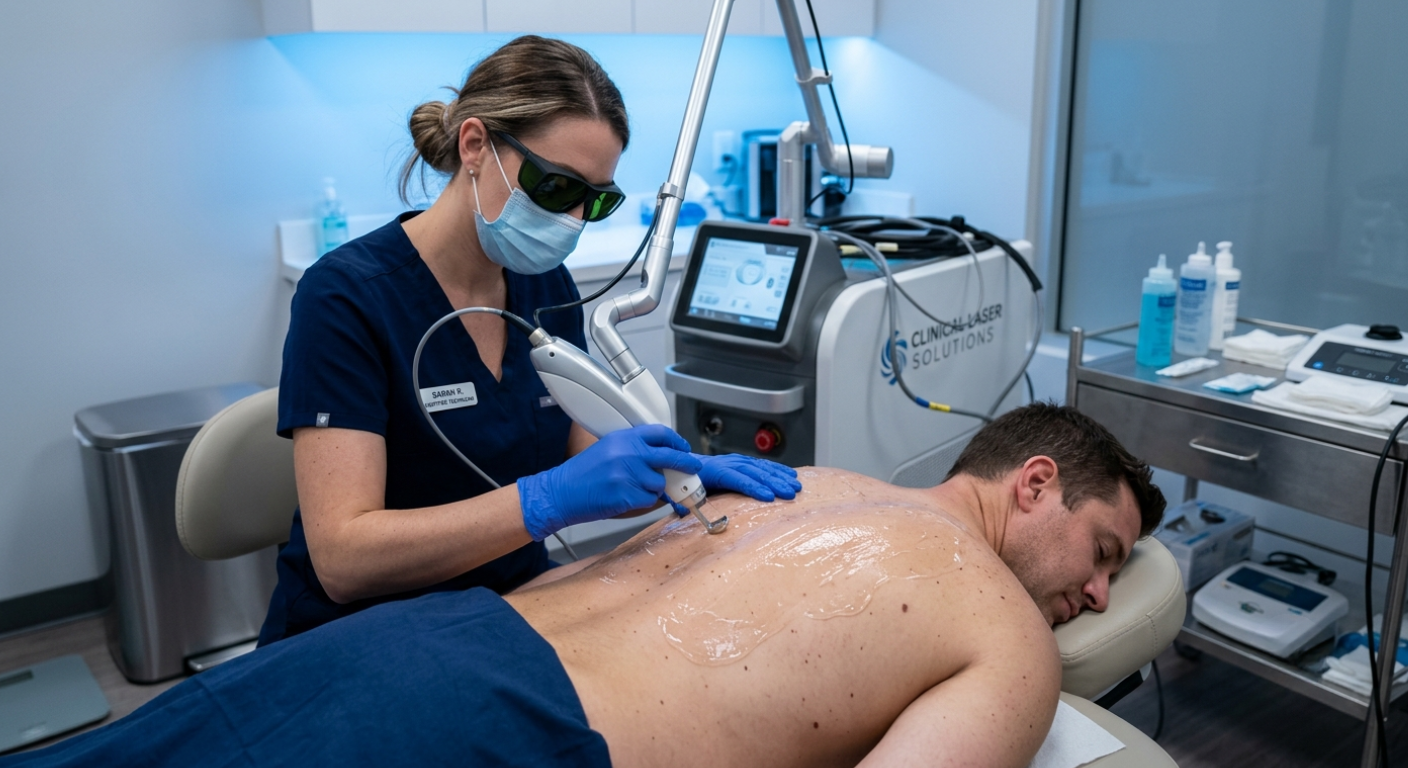
During the session, the technician will use a handheld laser device passed over the treatment area. Most patients describe the sensation as a quick, warm snapping feeling, similar to a rubber band flicking the skin. Cooling gels or built-in cooling systems on modern laser devices help minimize discomfort during treatment.
Session length depends on the size of the area being treated. Small areas like the neck or underarms may take just a few minutes, while larger areas like the back or legs can take 30 minutes to an hour. Most men require a series of four to eight sessions, spaced four to six weeks apart, to achieve significant hair reduction, since this interval aligns with the hair growth cycle.
Recovery and Aftercare
One of the appealing aspects of laser hair removal is the minimal downtime involved. Immediately after treatment, it’s common to experience redness and slight swelling around the hair follicles, similar to a mild sunburn. This typically subsides within a few hours to a day.
To support healing and get the best results, most providers recommend:
- Avoiding sun exposure and always applying sunscreen to treated areas for several weeks.
- Skipping hot showers, saunas, and intense workouts for 24 to 48 hours, since heat and sweat can irritate freshly treated skin.
- Using a gentle, fragrance-free moisturizer to soothe the skin.
- Avoiding shaving or waxing between sessions if instructed, though light shaving is often permitted once irritation subsides.
Over the following days and weeks, treated hairs will gradually shed, which can look like continued hair growth at first. This is a normal part of the process, not a sign that treatment failed.
Results and Long-Term Expectations
Most men notice a visible reduction in hair density after just two to three sessions, though full results typically require the complete recommended series. While many providers describe results as “permanent hair reduction” rather than complete permanent removal, most men experience significantly finer, sparser regrowth that requires little to no maintenance afterward. Occasional touch-up sessions once or twice a year can help maintain results long-term, particularly in areas with stubborn or hormonally influenced hair growth.
Is It Worth It?
For men tired of daily shaving, recurring razor burn, or ingrown hairs, laser hair removal offers a practical, longer-term solution. While it requires an upfront investment of time and money, many find the reduced maintenance and improved skin comfort well worth it. As with any cosmetic procedure, results vary based on hair color, skin tone, hormonal factors, and consistency with the recommended treatment schedule, so setting realistic expectations and choosing an experienced, licensed provider are key steps toward smooth, low-maintenance skin.
Conclusion
Body hair laser treatment has given men a practical alternative to the daily frustrations of shaving, from razor burn to ingrown hairs. By targeting hair at the follicle, it offers a path to smoother skin with far less upkeep over time. While it takes a few sessions to see full results, most men notice real improvement early in the process. At Laser Den, working with experienced, licensed technicians and following the recommended aftercare steps makes a real difference in your results. For many, choosing Laser Den for treatment pays off in lasting comfort and confidence in their skin.
FAQs
Does laser hair removal hurt?
Most men describe it as a quick warm snap, similar to a rubber band flick. Discomfort is usually mild and manageable.
How many sessions will I need?
Most men need 4 to 8 sessions, spaced 4 to 6 weeks apart, to see significant results.
Is laser hair removal permanent?
It leads to long-term hair reduction rather than complete permanent removal. Regrowth is usually much finer and sparser.
Can I shave before my appointment?
Yes, shaving the area a day or two before treatment is recommended so the laser can target the follicle properly.
Is there any downtime after treatment?
Little to none. Mild redness or swelling is common but usually fades within a few hours to a day.